
For Stu Cook, great tone starts with the basics. In this quick chat, the Creedence Clearwater Revival bassist talks feel, fundamentals, and where Origin Effects pedals fit into his rig today.

OE: You’ve had one of the most recognisable bass tones in rock history. What’s the most important thing you look for in a bass tone, and how do you achieve that in your current rig?
SC: “Tone is in the ear of the beholder, a completely subjective quality. Much of what is referred to as tone is generated by the hand that attacks the strings, giving each player a unique tone. Fingers deliver a fatter, but generally less focused, attack than a pick. Index and middle fingers, thumb – all different. For pick players, the material and thickness of the pick will change the tone. Additionally, the spot of attack – near the neck, or the bridge or anywhere in between will noticeably change the tone for either style of playing. From there, we add the electronics that complete the signal path, and what we ultimately hear is a piece of paper flapping. Then we judge…”
OE: When you first tried Origin Effects pedals, what stood out to you compared to other gear you’ve used over the years?
SC: “The clarity was the first thing that stood out. A compressor that didn’t take away from my tone, but let it come through.”
OE: How are you currently using Origin pedals in your setup—are they shaping your core tone, or more for specific moments and textures?
SC: “The Cali76 Bass Compressor is the first pedal in my chain. The circuit design allows for the dynamics of my playing, and keeps the bass out front without being too loud.”
OE: Your playing on songs like “Fortunate Son” and “Bad Moon Rising” is instantly recognisable. What was your mindset as a bass player when those records were being made?
SC: “One thought only – serve the song with a performance that was beyond the studio. I always imagined I was playing to an audience when we were recording.”
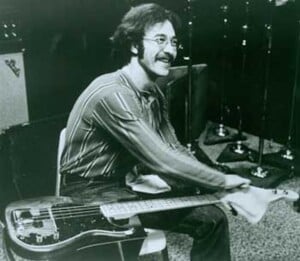 OE: Looking back, what do you think made Creedence Clearwater Revival’s rhythm section feel so tight and distinctive?
SC: “Our job was to make the other guys sound great. We were a pick and shovel rhythm section, down in the trenches.”
OE: After decades of playing, recording, and touring, what still excites you most about picking up the bass today?
SC: “It’s getting harder to remember how rudimentary the bass rigs were back in the 60’s. Bass straight into the amp, no pedals, not even a tuner. Now, the options to shape and enhance tone are nearly endless. I don’t think I could go back to the beginning. That said, there’s a great joy in dropping the bass on my shoulder, taking the amp out of standby and hitting the first note. It never gets old.”